Meeting Action Item Tracker: How to Turn Meetings Into Clear Next Steps
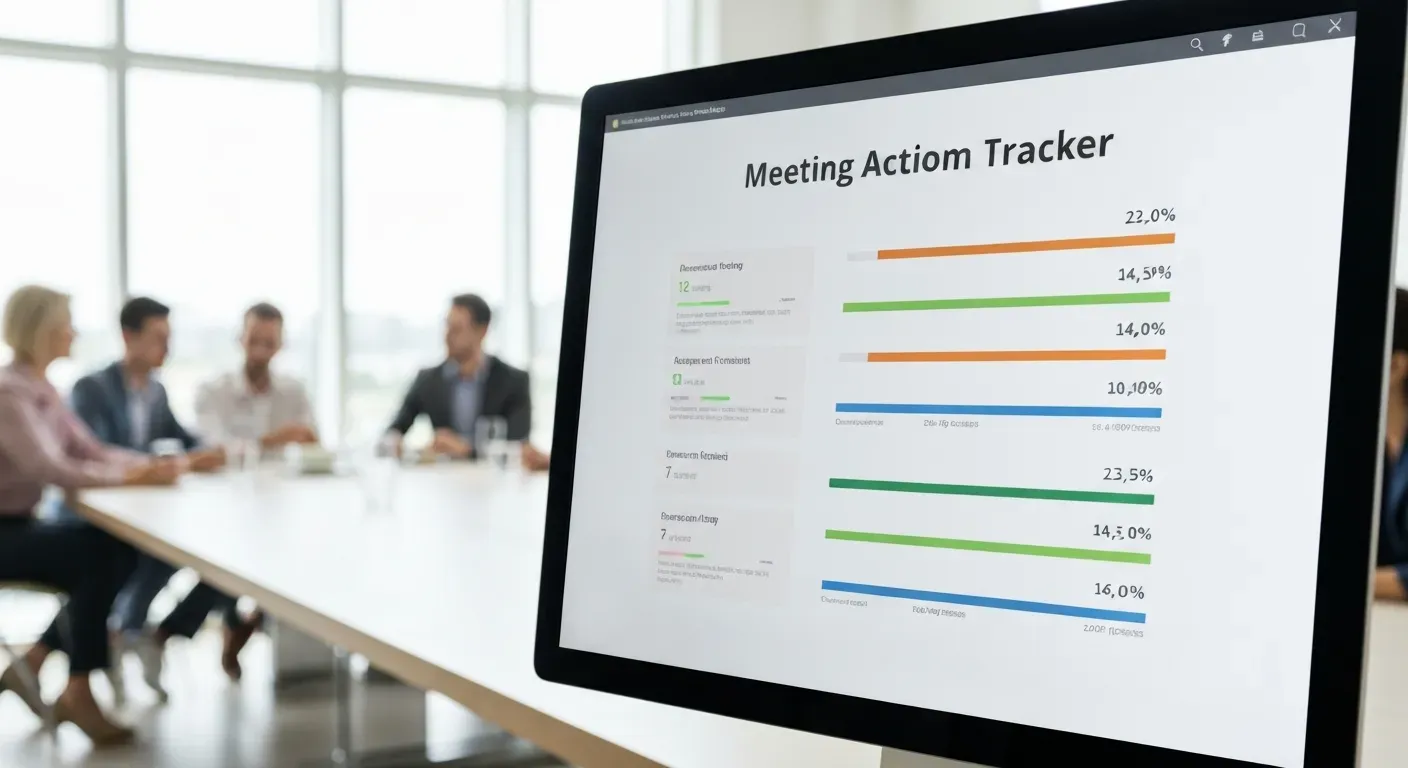
Are your weekly meetings filled with brilliant ideas, only to end with a frustrating lack of actual execution? It is incredibly common to watch valuable discussions fade away as crucial tasks slip through the cracks. Without a clear follow-up system, your team's creative momentum quickly turns into disorganized chaos.
To bridge the gap between talking and doing, you need a dedicated system to hold every team member accountable. Implementing a reliable meeting action item tracker is the ultimate way to transform post-meeting confusion into crystal-clear next steps. This essential tool guarantees that every task is properly assigned, closely monitored, and successfully completed.
This comprehensive guide will show you exactly how to build an effective tracking system tailored for the collaborative landscape of 2026. We will explore how to capture essential task details, avoid common team pitfalls, and leverage modern AI to streamline your workflow. Get ready to discover practical examples that will consistently drive your project momentum forward.
Understanding the Challenge: Why Action Items Get Lost
Meetings often conclude with a flurry of decisions and tasks. Without a structured system, these 'action items' quickly vanish amid daily pressures. This creates a significant gap between discussion and execution. A robust meeting action item tracker is essential to bridge this divide and ensure follow-through.
The Post-Meeting Void
Meetings generate momentum, but this energy dissipates without clear next steps. Participants leave with good intentions, yet tasks often get buried in scattered notes or unread emails. This lack of systematic capture means critical commitments fade. The result is stalled progress and missed opportunities.
Lack of Clear Ownership and Deadlines
A primary reason for missed action items is unclear responsibility. When no specific individual owns a task, or a realistic deadline isn't set, tasks languish indefinitely. This erodes accountability across the team. Ambiguous assignments also hinder effective delegation, directly impacting overall productivity and team collaboration.
Information Overload and Poor Documentation
Excessive information, disorganized meeting notes, and a lack of centralized tracking contribute significantly to lost action items. Without a dedicated system to capture and review these tasks, crucial details become easy to overlook or misinterpret. Ineffective meeting practices, like vague discussions, leave participants unsure of their specific responsibilities, further hindering project momentum.
AI tools can transform this process. By transcribing meetings, generating summaries, and extracting action items, they provide a structured foundation. This allows teams to capture next steps precisely. Vemory, a newcomer in the AI meeting space, currently offers a free trial/beta that assists in this area, improving how teams manage their commitments and ensuring accountability. For teams seeking to enhance their workflow, exploring such solutions can be beneficial.
This structured approach ensures that decisions translate into tangible outcomes. A well-maintained meeting action item tracker becomes the backbone of effective project execution, transforming discussions into delivered results.
Building an Effective Meeting Action Item Tracker in 2026
After client calls and internal syncs, teams often face a severe execution gap. Tasks disappear into buried notes. Owners remain unclear. Deadlines slip. A structured meeting action item tracker solves this problem. It captures next steps systematically, maintains workflow momentum, and enforces strict post-meeting accountability.
Essential Components of a Good Tracker
An effective tracker goes beyond a basic checklist. It requires specific data points: the exact task, one assigned owner, a due date, current status, and related dependencies. Simplicity drives consistent team use across departments. Complex spreadsheets cause friction and lower adoption rates.
Client-facing teams rely on this centralized hub to monitor progress across multiple accounts. They stop chasing status updates through scattered email threads. Integrating this tracker into daily collaboration tools turns it into a living document for continuous project management.
Capturing Tasks, Owners, and Deadlines
Clarity prevents missed deliverables. Teams must define the specific task using strong action verbs. They must assign a single owner responsible for completion.
"Shared ownership creates zero ownership. Teams must assign one distinct owner per task."
During a weekly project meeting, a vague note like "update the client report" fails. A precise entry like "John will send the Q3 client report by Thursday at 5 PM" guarantees execution. This format provides a clear roadmap for project execution.
| Component | Traditional Note-Taking | Structured Tracker |
|---|---|---|
| Task Definition | Vague bullet points | Specific action verbs |
| Ownership | Unassigned or shared | Single distinct owner |
| Timeline | Ambiguous ("ASAP") | Exact date and time |
| Context | Missing | Linked decisions |
The Role of AI in Transcription and Summarization
AI tools change how teams handle post-meeting administration. Transcription services record every spoken word during a sync. AI engines analyze this text to extract action items automatically. They summarize core points and suggest potential owners and deadlines based on the dialogue.
This automation reduces manual data entry. Operations teams save hours previously spent typing up notes. Vemory enters this space as a creative newcomer offering these capabilities. Currently in its free trial and beta phase, it functions as a free AI meeting assistant to streamline task extraction and improve meeting efficiency.
Tracking Key Decisions and Context
A robust tracker records more than just pending tasks. It logs critical decisions made during the discussion. It also captures the underlying reasoning behind those choices. This historical context provides a reliable reference for team members who missed the client call.
Documenting decisions prevents teams from revisiting the same debates in future meetings. It ensures alignment across the entire organization. When a task requires execution three weeks later, the assigned owner understands exactly why the project took that specific direction.
Teams eliminate the execution gap when they build a systematic workflow. A reliable meeting action item tracker replaces scattered notes with structured data. By combining clear task definitions with AI-driven meeting summaries, managers ensure accountability, hit deadlines, and drive concrete results.
Practical Workflows: From Conversation to Accountability
Bridging the gap between meeting discussions and tangible outcomes requires a robust meeting action item tracker. Teams often struggle to capture next steps effectively, leading to buried tasks and missed deadlines. This section explores how to build efficient workflows, from manual methods to AI-assisted improvements, ensuring project momentum.
Manual vs. AI-Assisted Tracking
Manual tracking using spreadsheets or simple templates is feasible for small teams or infrequent meetings. However, AI-assisted workflows offer significant advantages in speed, accuracy, and comprehensive capture. AI can transcribe meetings, identify action items, and generate summaries, reducing manual data entry and potential errors. This shift allows teams to focus on execution rather than administrative overhead.
| Feature | Manual Tracking | AI-Assisted Tracking |
|---|---|---|
| Transcription | Manual input required | Automated |
| Action Item Capture | Prone to oversight | Intelligent extraction |
| Summary Generation | Time-consuming | Instantaneous |
| Data Entry Errors | Higher risk | Lower risk |
| Speed of Output | Slower | Faster |
What to Include in an Action Item Record
Each action item record should ideally include a clear, actionable description of the task. The name of the assigned owner is crucial for accountability. A specific due date provides a target for completion. The current status, such as "To Do," "In Progress," or "Completed," offers immediate visibility. Any relevant notes or links to supporting documents form a comprehensive action item list.
Reducing Missed Follow-Ups
To reduce missed follow-ups, establish a clear review process for action items. This could involve reviewing them at the beginning of subsequent meetings. Automate reminders for upcoming deadlines. Ensure progress tracking is visible to relevant team members. This visibility fosters accountability and encourages proactive engagement with assigned tasks.
Vemory's Role in Summaries and Task Extraction
Vemory, as a creative newcomer in 2026, can enhance these workflows. It provides intelligent summaries of meeting transcripts. The platform automatically extracts potential tasks and facilitates decision tracking. Its collaborative features can further streamline assigning and managing action items. Discover how Vemory's AI meeting assistant can benefit your team by exploring its features. Vemory's AI meeting assistant.
By integrating AI for summaries and task extraction, Vemory helps teams move efficiently from raw meeting conversations to clearly defined, assigned, and trackable tasks. This ensures project momentum is maintained through consistent progress tracking. Implementing an effective meeting action item tracker, enhanced by AI, transforms post-meeting chaos into organized productivity.
Examples for Different Teams in 2026
In the fast-paced work environment of 2026, effectively capturing and actioning post-meeting outcomes is critical. A well-structured meeting action item tracker transforms discussions into tangible progress. This section explores how different teams can leverage this tool to enhance productivity and accountability.
Consulting Teams: Client-Facing Action Items
For consulting teams, meticulously tracking client-facing action items is paramount. This involves clearly documenting agreed-upon tasks, deadlines, and client responsibilities directly within meeting notes. Promptly sharing these details ensures everyone understands their commitments. Using a shared tracker provides transparency and effectively manages client expectations, vital for successful project execution. This structured approach prevents tasks from getting buried and ensures timely follow-through.
Remote Teams: Ensuring Seamless Collaboration
Remote teams benefit immensely from robust action item tracking systems. Tools offering real-time updates and clear task delegation are essential for maintaining alignment. Centralized communication channels, potentially enhanced by AI-powered summaries, help keep everyone informed. This supports effective team collaboration and sustains project momentum. A dedicated meeting action item tracker prevents miscommunication and ensures remote team members remain connected to project goals.
Internal Project Teams: Driving Project Momentum
Internal project teams can leverage action item trackers to maintain focus and ensure all tasks contribute to overarching project goals. Integrating the tracker with existing project management software automates progress tracking. This provides clear visibility on task delegation and completion. Such integration streamlines workflows, allowing project managers to monitor progress efficiently. This proactive approach minimizes bottlenecks and keeps projects on schedule.
Regardless of team type, the core principle remains: a well-maintained meeting action item tracker, supported by clear meeting practices and effective task management, is fundamental to successful execution in the dynamic work environments of 2026. Creative newcomers like Vemory are exploring AI's potential to further refine this process, currently offering a free trial/beta. This technology can assist with transcription, action item extraction, and decision tracking, enhancing the utility of any meeting action item tracker.
Common Mistakes to Avoid With a Meeting Action Item Tracker
Teams lose momentum after project meetings when tasks get buried in notes. A dedicated meeting action item tracker solves this execution gap. AI tools capture next steps through transcription and action item extraction. Vemory, a creative newcomer currently in free beta, structures these post-meeting workflows.
Vague Task Descriptions
Avoid vague action items like "Follow up on sales." Specificity drives results. Write "Send Q3 sales report analysis to Marketing by EOD Friday." This clarity ensures everyone understands the exact requirement. An AI meeting assistant extracts precise deliverables from client calls directly into your workflow.
| Task Type | Example | Outcome |
|---|---|---|
| Vague | "Follow up on design" | Confusion, delays |
| Specific | "Submit UI wireframes by Tuesday at 5 PM" | Clear accountability |
| AI-Extracted | "Client X needs API documentation by Thursday" | Immediate execution |
Unclear Ownership
Assign every action item to a single owner. Assigning tasks to "the team" guarantees failure. When multiple people share a task, no one takes responsibility. During internal syncs, designate one primary owner per deliverable. This practice builds strict accountability.
"If a task belongs to everyone, it belongs to no one."
Ignoring Deadlines
Treat deadlines as firm commitments. Ignoring deadlines delays projects and erodes team trust. If team members need deadline adjustments, they must communicate proactively. A meeting tracker logs these dates clearly. AI decision tracking flags approaching due dates before they pass.
Lack of Follow-Up Process
Implement a strict system for regular review. Without a defined follow-up process, well-defined tasks fall through the cracks. Managers must check progress and address roadblocks weekly to maintain efficiency.
A structured meeting action item tracker prevents lost tasks and missed deadlines. Teams maintain momentum when they document owners and dates clearly. Try Vemory's beta to automate your summaries and keep your execution gap closed.
FAQ (Frequently Asked Questions)
Q1: What is the most critical element of an action item?
A1: Clarity drives execution. Every task requires three specific components: a defined action, a designated owner, and a strict deadline. This exact structure makes the task trackable.
Q2: What's the difference between a meeting note and an action item?
A2: Notes record general discussions and decisions during internal syncs. Action items extract specific, assigned tasks from those notes that require completion.
| Element | Meeting Note | Action Item |
|---|---|---|
| Core Function | Captures overall discussion | Defines specific next steps |
| Assignment | No specific owner | One designated owner |
| Timeframe | Historical record | Strict future deadline |
Q3: Can AI fully replace manual action item tracking?
A3: No. AI tools automate transcription, summarize calls, and extract action items. However, human oversight remains necessary to verify context, prioritize complex tasks, and finalize assignments.
Q4: How often should action items be reviewed?
A4: Review tasks at the start of subsequent meetings. Teams should also check task status during regular weekly check-ins. This consistent routine highlights project blockers immediately.
Q5: How does tracking action items improve productivity?
A5: Tracking removes ambiguity from workflows. When managers assign clear tasks, team follow-up accelerates. A solid tracker monitors progress and prevents missed deadlines across all teams.
Conclusion
Using a dedicated meeting action item tracker bridges the post-meeting execution gap. Teams stop losing critical tasks inside long transcripts. Structured tracking enforces accountability and ensures teams complete every assigned task on time.
Effectively tracking meeting action items is absolutely fundamental to turning productive discussions into tangible results in 2026. By implementing clear structures, leveraging AI, and avoiding common pitfalls, teams can significantly enhance their daily execution capabilities. Ultimately, a reliable meeting action item tracker bridges the critical gap between talking about great ideas and actually getting the work done.
Start by carefully evaluating your current meeting practices to identify key areas for immediate improvement. Next, assign clear ownership and firm deadlines to every single task while building a consistent routine for reviewing progress. To capture these important details effortlessly, implement a standardized template or explore innovative AI-powered tools like Vemory to streamline the entire process.
Are you finally ready to completely transform your meetings and accelerate your project momentum? Start implementing a robust action item tracking system today and experience a massive difference in your team's overall productivity and focus. Explore Vemory's free trial right now to see exactly how AI can effortlessly streamline your workflow and drive success!